|
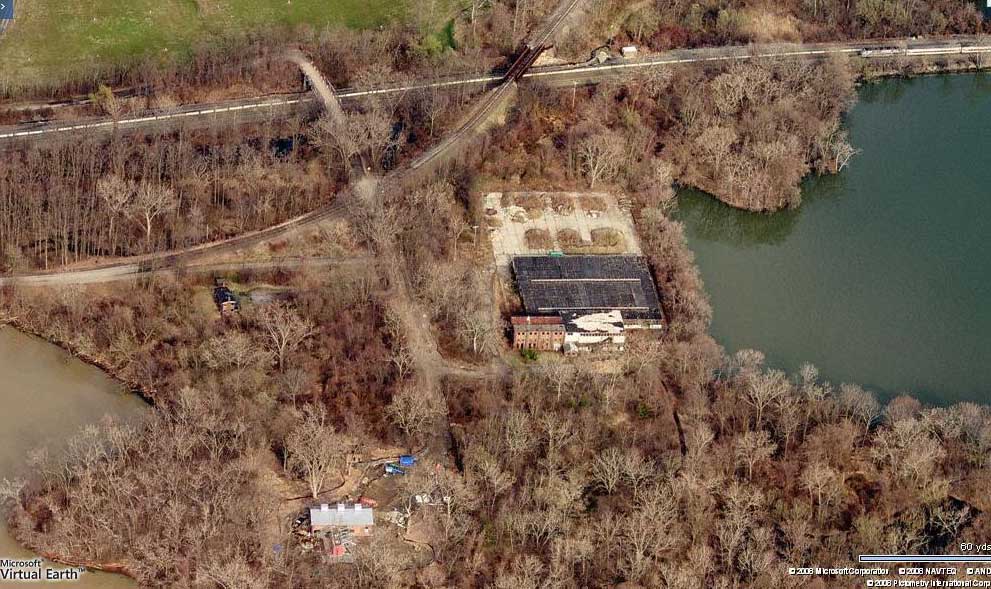
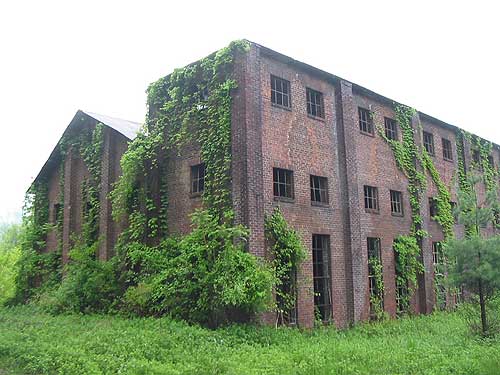
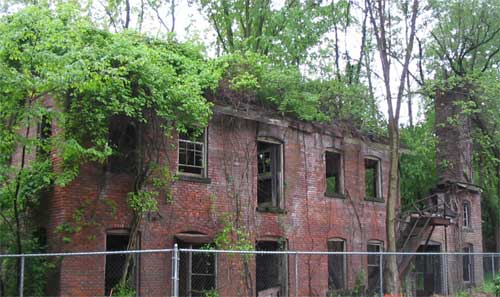
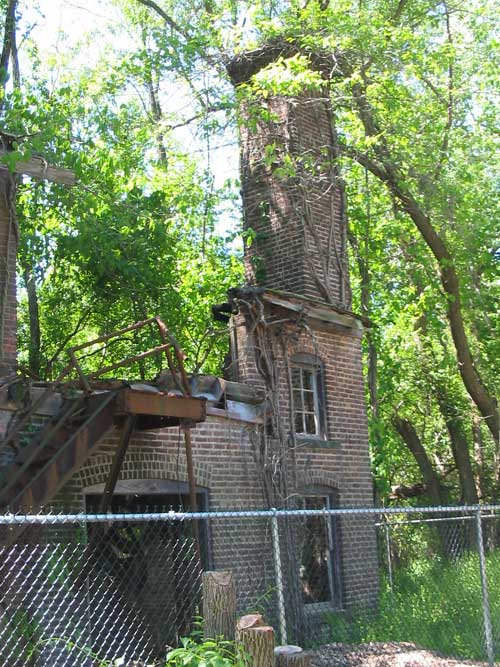
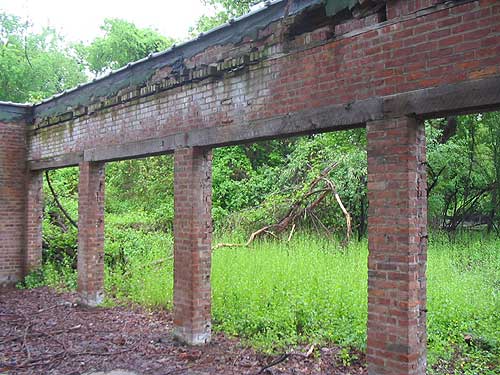
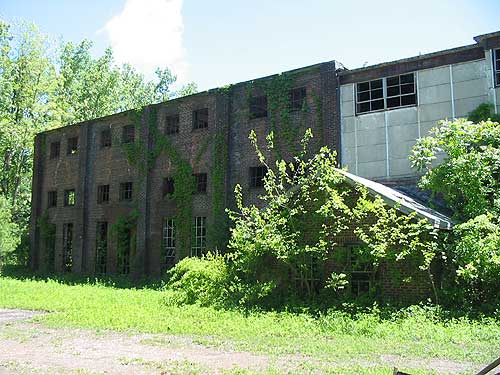
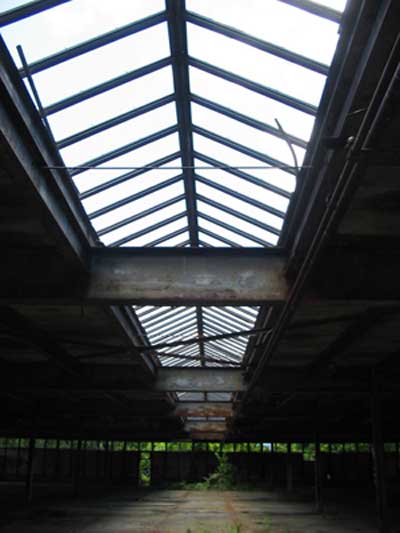
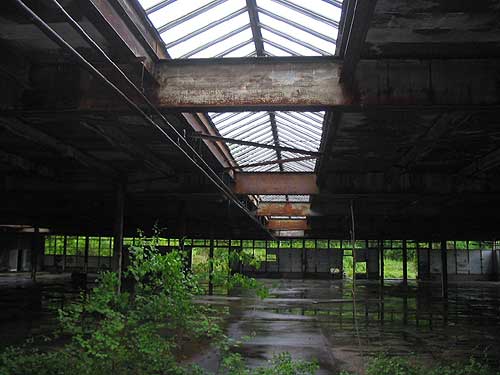
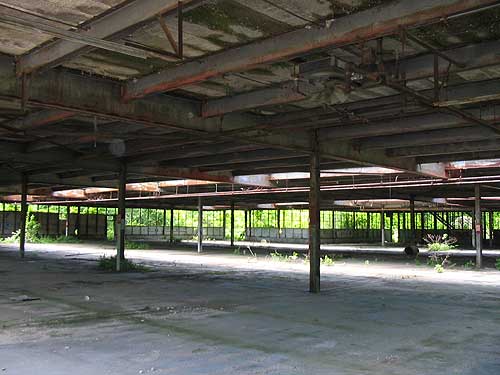
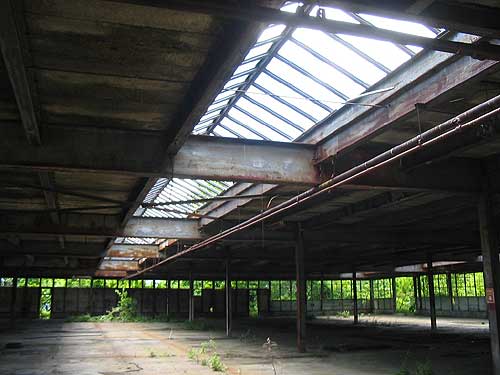
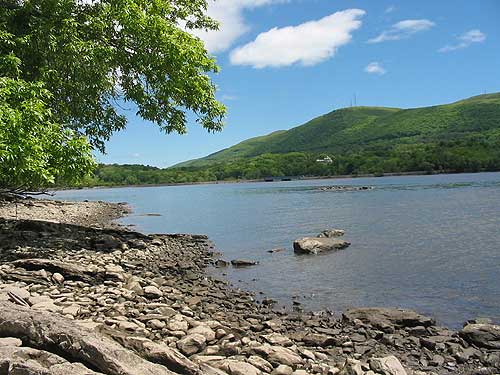
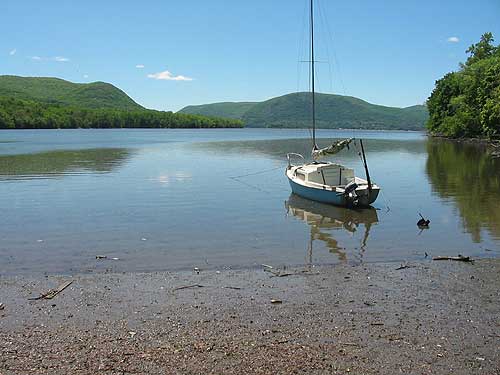
Denning's Point is a peninsula that juts out into the Hudson River approximately 58 miles north of New York City. It was the first location of the Denning's Point Brick Works. Denning's Point is in Dutchess County in the southwest portion of Beacon, NY. It's in the center of your screen in this Google Satellite view. If you zoom in, you can see some of the remains of the brick factory buildings. (Scroll down for more pics.)
1609: Henry Hudson moored mid-river between Denning's Point and Newburgh. Whether any of his crew
actually came ashore onto what was then called "the Island in Fishkill Bay" is unknown.1
Aug 8, 1683: Francis Rombout and Gulian Verplank purchased 85,000 acres from the Wappinger tribe. Called the Rombout Patent, this land included what is today known as Denning's Point.
1691: Francis Rombout dies and wills his share of the Patent to his daughter, Catharyna.
1709: Catharyna, now married to Roger Brett, built a gristmill at the mouth of Fishkill Creek (next to Denning's Point).
1743: Now a widow, Madam Brett built the Frankfort Storehouse and Freight Depot just north of the Point. Here flour ground in her mill along with produce from over twenty Dutchess County area farmers awaited shipment to New York on her fleet of sailboats.1 The Storehouse continued in business until the 1840s.
1738: Madam Brett sold the land to Jacobus de Peyster who renamed it "DePeyster's Point."
1776: The Point served as eastern terminus of Revolutionary period ferry to Newburgh and New Windsor.
1781: Alexander Hamilton rented a home at DePeyster's Point (also known then as "Fishkill Hook"). Historians now believe it was here that Hamilton penned articles that were precursors to the Federalist Papers.1
1785: Adjutant-General William Denning of George Washington's staff
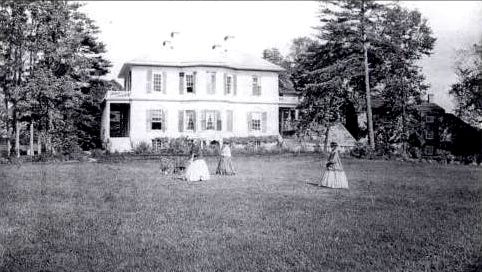
(also a New York merchant) purchased the land. The Denning family built a mansion "Presqu’ile" on the southern part of the point.
1868: The Boston, Hartford and Erie Railroad purchased property at Denning's Point adjacent to Dutchess Junction. Their grand plan was to connect New England cities with a shipping terminal on the Hudson River but they went bankrupt in 1870.
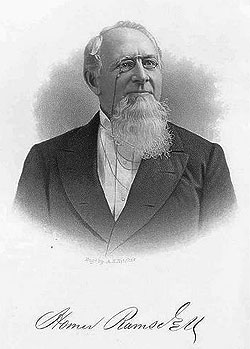
1872: Newburgh's Homer Ramsdell (president of the Erie Railroad 1853-1857 and owner of the Ferry Landings at Newburgh and Beacon before the Mid-Hudson Bridge) bought the portions of the Point from the bankrupt railroad.
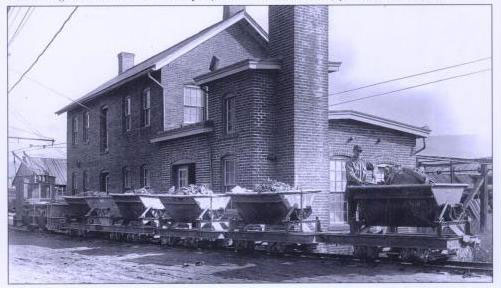
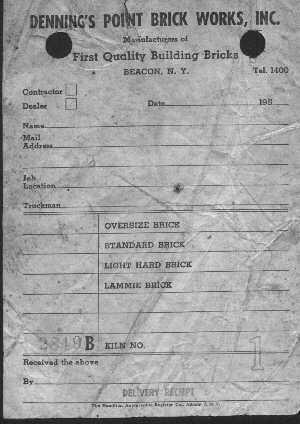
1881: Taking advantage of the clay deposits, plentiful sand and convenient river and rail transportation. Ransdell had a brickyard built by McLean & Co. Emily Denning Van Rensselaer and family stayed in "Presqu’ile" (even though brickyard activities came to surround them). The "Denning's Point Brick Co" employed 150 men, and sold 15 million brick. Note: early bricks found on the site are marked "DPBCo." At some point the name was changed to "Denning's Point Brick Works" and the brand marking became "DPBW."
1890: Emily Denning Van Rensselaer’s daughter Emily left the Denning mansion. Brick workers’ families moved in.
1920s: The Denning mansion was in ruins, but the brickyards were in their heyday under the management of David Strickland. In 1911 he patented Improved Brickmaking Machinery. In 1920 he created the Strickland Automatic Brick-making Machine. In 1925, a low-pressure steam brick dryer. These innovations plus numerous other patents were employed at the DPBW and at its peak, production reached 400,000 bricks per day.1
1920s-1930s: Thousands of swimmers came to Denning’s Point, which became known as the "Coney Island of Dutchess County."
1939: The Denning’s Point Brick Works pulled out of their original home and moved a few miles north to Brockway to find new sources of clay. At its height "DPBW"
fired enough bricks - 400,000 during a peak day - to help build the Empire State Building and Rockefeller Center.
1942: The Estate of Homer Ramsdell sells the Dennings Point property to Industrial Plants Corporation.
1944: The property is purchased by 4 women: Anne Kriser, Marie Kriser, Virginia Danner and Doris L. Rosenberg.1
1946: General Builders Corp, a large materials dealer in New York City purchased the Dennings Point plant. Its president Jim Farley
was a nominee for the U.S. presidency and then served as postmaster general during Franklin Roosevelt's administration.3
Born on May 30, 1888, in Grassy Point, New York, James Aloysius Farley was the son of brick maker James and his wife Ellen (Goldrick), both children of Irish immigrants. His father worked first as a brickyard laborer and later as a part owner of three small schooners engaged in the brick-carrying trade. (See also: Webmaster Note, below.)
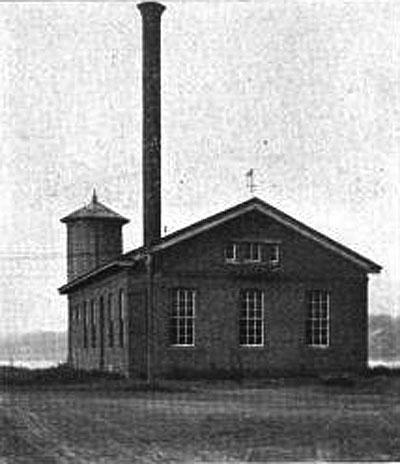
1947: The site was bought by a manufacturer of construction panels called Durisol. The panels were made from a mixture of Portland concrete and wood chips and were tough and acoustically friendly. Durisol constructed new factory buildings on the point using its own materials, which were also used in the construction of several modernist houses around nearby Garrison, and for sound barrier walls lining the New York State Thruway. On July 24, 1954 Durisol president John Dale (a native of Cold Spring, NY) ceased production declaring they could not make money at the Beacon plant.
1988: New York state bought the 64-acre peninsula - a favorite haunt of bald eagles - for an estimated $6 million. Historian Jim Heron, author of Denning's Point, A Hudson River History
2003: NY Governor George Pataki spoke at Denning’s Point to celebrate the choosing of Beacon for the site of the $27 million dollar research facility, the Rivers and Estuaries Center.
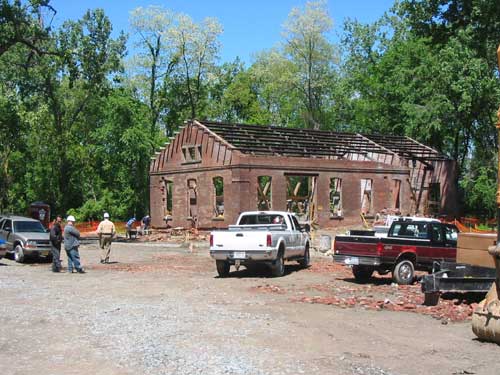
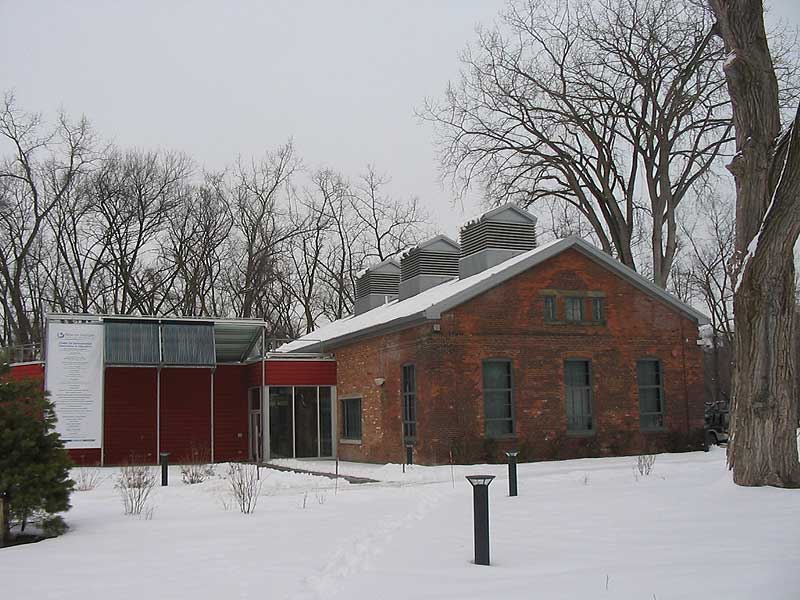
2006: The Beacon Institute for Rivers and Estuaries celebrated groundbreaking on Building One at Denning's Point. Construction on the second building (the old Noesting/Durisol factory) is slated to begin soon.
"The Greater New York Brick Company was... a hybrid organization resulting
from the initiative of a handful of New York brick brokers--the commission men.
William Barnes, John McNamara, and Richard Morrissey were prominent names among the early twentieth-century commission men. Barnes was
originally in the brick business at Grassy Point (the XXX brand) with the Farleys. A son of the latter family, James, became a nominee, for
the U.S. presidency and then served as postmaster general during Franklin Roosevelt's administration. Jim Farley then became president of
General Builders, a large materials dealer in the city that also purchased the Dennings Point plant (opposite Newburgh) in 1946. Farley was
famed for his legendary ability to unfailingly associate an enormous number of peoples' names with their face priding himself on instant
recall.
The Morrisseys were also in the brick business on the Minisceongo Creek (at Grassy Point). Barnes, McNamara, and Morrissey, by World War I,
became a principal brick brokerage firm in the city and remained in business into the middle of the century, with the Hutton Company as a
significant account. By the middle or the first decade of the century, the commission men were already working closely with the
manufacturers, at times furnishing financing as well. Many of those brokers were themselves originally from Haverstraw and Grassy Point and
on good personal terms with many of the brickmakers. Nevertheless, the objective was to produce the largest number of brick at the lowest
cost. That was the market imposed condition for the manufacture of common bricks for the New York City market--and the negative effects of
this inexorable pressure on the industry's profits and consequently upon investment in new technology, plant and equipment, wages, and
working conditions cannot be overemphasized. By 1911, most of the manufacturers were forced to recognize the advantages of being under the
corporate wing of the Greater New York."
Brickcollecting.com is powered by
Hudson River Brickmaking |
Brick History/How Bricks Were Made
|


 , says the land was saved by an owner who had to decide between preservation and profit. The Griffiths family took more than a million less than offered by a residential developer so it could become Dennings Point State Park.